
Classic Cars Are Rarely About Cars
They are, instead, about intent, about what designers thought the future might look like, and how boldly they were prepared to draw it. Long before the language of “user experience” colonised design, the motorcar was already its most persuasive expression: a total work of engineering, aesthetics, aspiration, and theatre.

My own education in that belief began in 1975 at the Glasgow Motor Show. I was young enough to be overwhelmed and old enough to know it mattered. Motor shows in that era were less about commerce and more about spectacle, cathedrals of chrome and conjecture. Manufacturers weren’t just selling transport; they were proposing futures. Some were sober, some delusional, but all were confident.
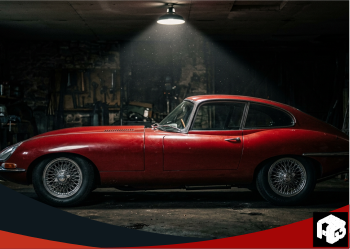
That confidence is what separates classic cars from their modern descendants. Today’s vehicles, for all their algorithmic brilliance, often feel negotiated shaped by regulation, focus groups, and the polite tyranny of efficiency. By contrast, a car like the Jaguar E-Type is not negotiated. It is declared. Famously described as “the most beautiful car ever made,” it remains less a product than a provocation: a piece of industrial design that refuses modesty.

And yet beauty in automotive design is rarely innocent. The Porsche 911, for instance, is often praised for its evolutionary consistency, a shape refined rather than reinvented. But what it really represents is discipline: an almost ideological commitment to continuity. It is design as restraint, a quiet rebuttal to the excesses of fashion. Park it beside something flamboyant and it appears almost austere, but its authority is unmistakable.
Then there are cars that operate in an entirely different register, machines that prioritise purpose so completely that style becomes a by-product. The Land Rover Series I and it therefore includes the red Land Rover Defender in the picture. and all the way through to the last of the iconic true Defenders is one such object.
Conceived in the austerity of post-war Britain, it is less designed than assembled from necessity. Flat panels, exposed rivets, an absence of ornament, everything about it speaks of utility. And yet, in its honesty, it achieves a kind of accidental elegance. It does not pretend to be anything other than what it is, which is perhaps why it has endured.


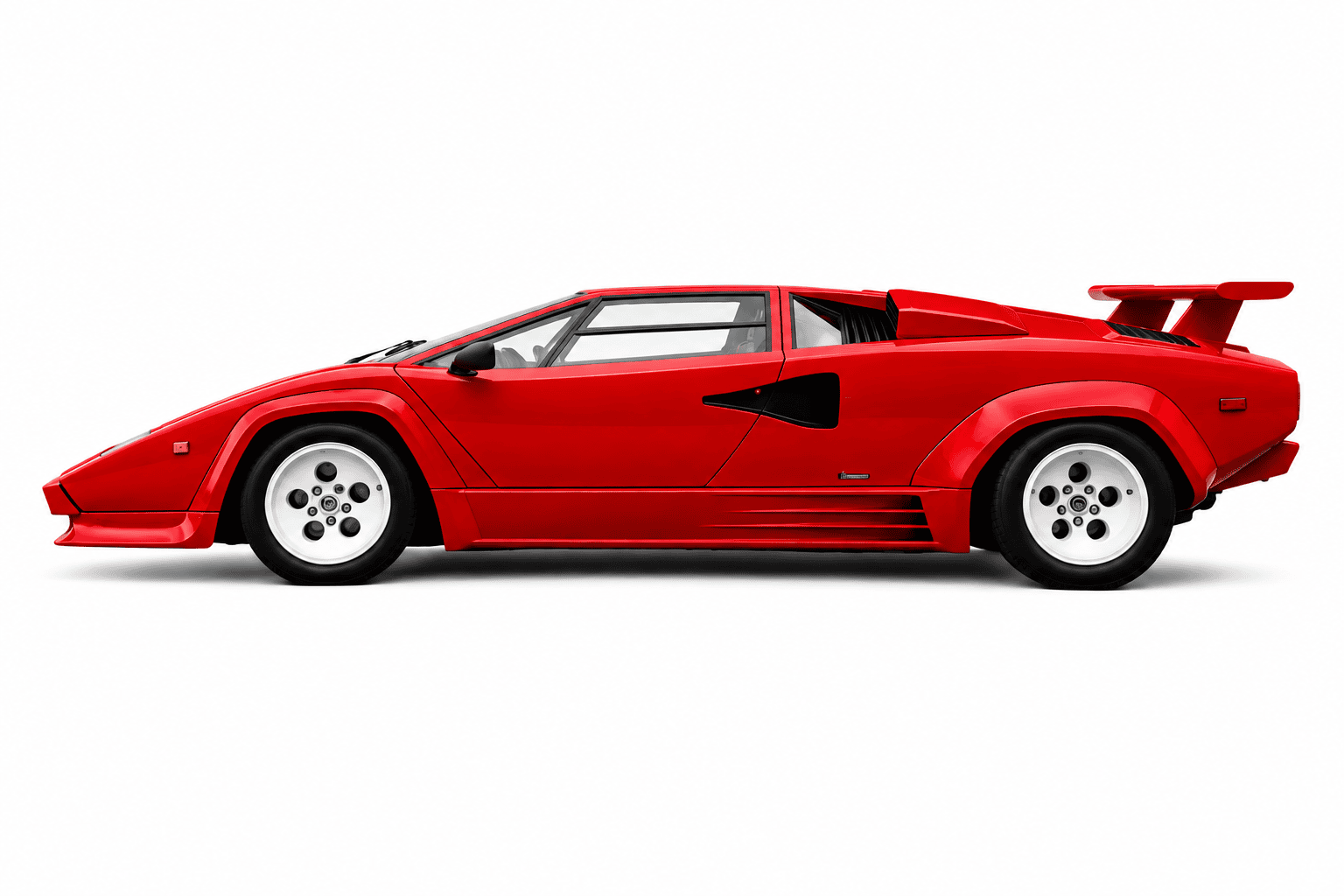
This tension between style and purpose is where automotive design becomes most interesting. The Lotus Esprit, with its origami-like geometry, looks as though it has been folded rather than built. It belongs to a moment when wedge-shaped futurism dominated design thinking, a period intoxicated by speed, space travel, and the aesthetics of sharp edges. It is dramatic, slightly impractical, and entirely compelling. You don’t so much drive it as participates in its idea.
Over the years I have owned Land Rovers, Porsches, Jaguars, Lotuses, and quite a few American muscle cars. They are all different in so many ways. Each represents a distinct philosophy of design and engineering , different attitudes toward performance, utility, elegance, excess, and emotion. Jaguar trades in elegance and latent aggression; Porsche in precision and continuity; Lotus in lightness and ingenuity; Land Rover in endurance and utility. The American muscle cars, by contrast, celebrate theatre, noise, and unapologetic power. Together they form less a collection than an ongoing conversation about what a car can be.
What unites them is not performance, but clarity. Classic cars tend to know exactly what they are. They are rarely apologetic. A Jaguar does not try to behave like a Porsche, nor does a Land Rover attempt to disguise its utility beneath unnecessary complexity. Each carries a strong and distinct point of view. Many contemporary vehicles, by contrast, can feel increasingly homogenised, shaped by shared platforms, digital interfaces, and aerodynamic conformity. The result is that many cars now appear as variations of the same idea, rather than expressions of fundamentally different philosophies.

There is also, of course, the matter of tactility. Classic cars demand participation. They require you to listen, to adjust, to understand their mechanical language. Steering is heavier, braking less forgiving, feedback more immediate. In an age of digital mediation, this analogue directness feels almost radical. It reminds you that design is not just visual, it is physical, sensory, and occasionally inconvenient.
But inconvenience is part of the point. A classic car resists the frictionless ideal that defines so much contemporary design. It asks more of you, and in doing so, offers more in return. There is a peculiar satisfaction in mastering something that does not automatically accommodate you, a sense of dialogue rather than control.
Perhaps that is why the fascination endures. Classic cars are not simply artefacts of the past; they are arguments about the future that never quite went away. They embody moments when designers, engineers and manufacturers were willing to take risks, to assert a point of view, to believe that a car could be more than transport.
In that sense, they remain quietly subversive. Surrounded by vehicles that increasingly resemble each other, smoothed, optimised, algorithmically resolved, the classic car stands apart as a reminder that design once had edges. Literal ones, certainly, but also intellectual ones.
And it is those edges, first glimpsed in the bright, improbable theatre of a 1975 motor show, that continue to hold my attention. Not because they are perfect, but because they are purposeful. Not because they are efficient, but because they are expressive.
Classic cars are rarely about cars.
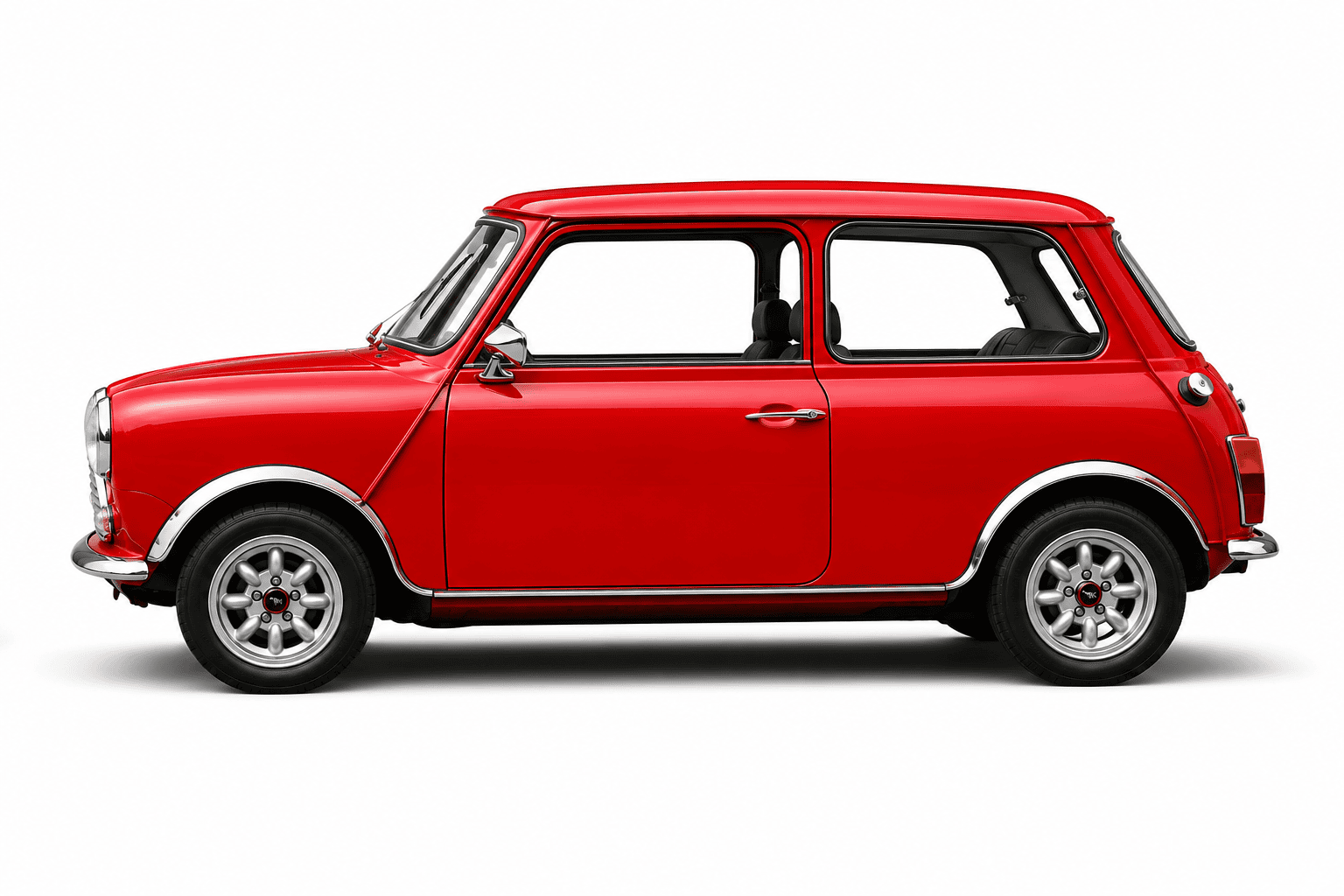

When Alain asked me to write about cars, I thought straight away that I did not want to write about cars as transport, and it’s worth resisting the temptation to do so here. Because the moment you reduce a car to mobility, you miss the point entirely. Cars, especially classic ones, are propositions. They are arguments cast in steel and glass about how life should be lived.
Rev on.