The Next Architectural Revolution Won't Happen on Earth
By Giuseppe Calabrese | Architect | PhD Engineering, Earth & Planetary Sciences | Postdoctoral Researcher in Climate Change Adaptation for Extreme Environments
"The first permanent settlements beyond Earth won't be built by astronauts. They will be built by robots."

That sentence sounds like science fiction, yet it reflects one of the most significant transformations our profession has ever faced.
For centuries, architecture has evolved alongside advances in materials, engineering and construction techniques. Stone gave way to steel, hand drawing evolved into Building Information Modelling (BIM), and sustainability has become central to contemporary design. Today, however, we are entering another turning point, one that extends beyond our planet.
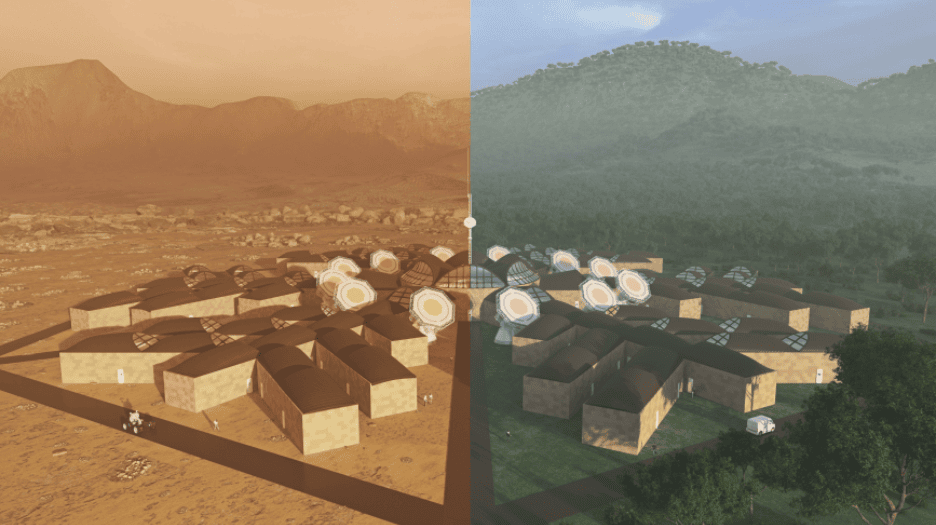
Governments, research institutions and private companies are actively preparing for long-term human missions to the Moon and, eventually, Mars. These ambitions are not simply about exploration. They present architects with one of the greatest design challenges in history: how do we create places where people can safely live, work and thrive in environments that are among the most hostile imaginable?
As an architect and researcher specializing in space architecture, I have come to realize that designing for space is not about escaping Earth. It is about rethinking architecture itself.
Architecture Beyond Earth
Unlike buildings on Earth, lunar habitats cannot rely on familiar construction methods. There are no roads, no supply chains, and no workforce waiting on site. Every kilogram launched into space comes at an enormous financial and logistical cost.
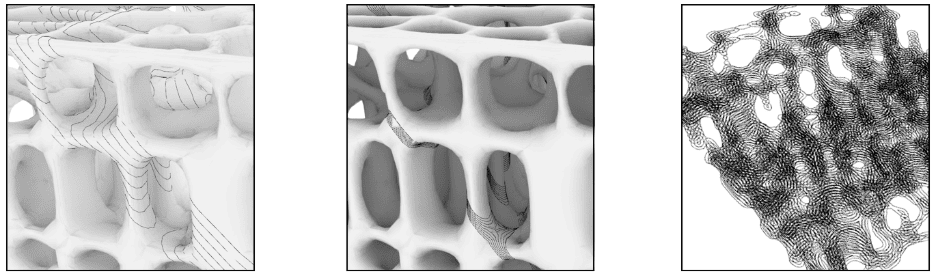
Future habitats will therefore need to be constructed using In-Situ Resource Utilization (ISRU), building with materials already available on the Moon or Mars. Lunar regolith, the layer of dust and fragmented rock covering the Moon's surface, is being investigated as a construction material and at the same time, autonomous robots are being developed to excavate, transport and print these materials before astronauts even arrive.
Learning from the Past to Build the Future
Ironically, while space architecture looks towards humanity's future, many of its lessons come from our past.
Throughout history, communities have successfully adapted to some of Earth's most extreme environments. From the rock-cut city of Petra in Jordan to the cave dwellings of Matera in Italy, from the windcatchers of Yazd in Iran to the underground homes of Coober Pedy in Australia, architecture has always responded creatively to scarcity, climate and local resources.
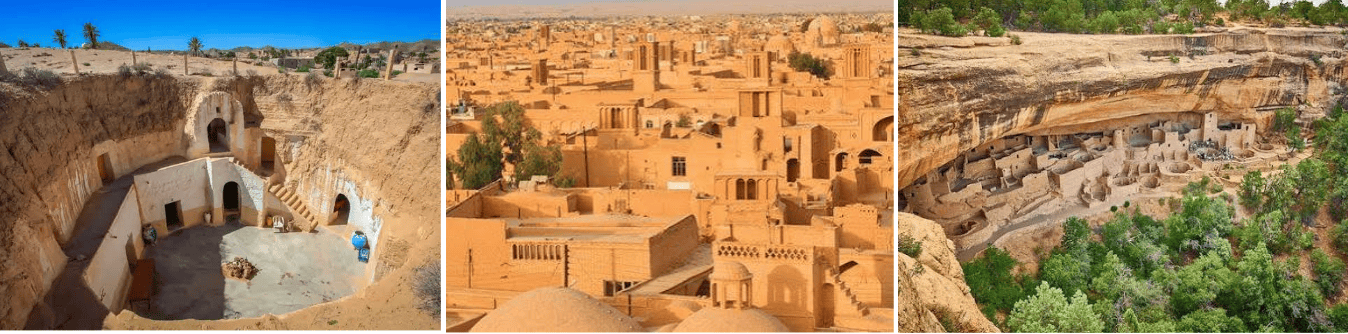
These settlements demonstrate timeless principles:
- Build with locally available materials.
- Design for thermal comfort using passive strategies.
- Minimize resource consumption.
- Adapt to environmental constraints rather than fighting them.
These are precisely the principles now guiding the design of off-Earth habitats.
Rather than inventing architecture from scratch, space exploration is encouraging us to rediscover knowledge that humanity has refined over thousands of years.
Lava Tubes: Nature's Ready-Made Habitats
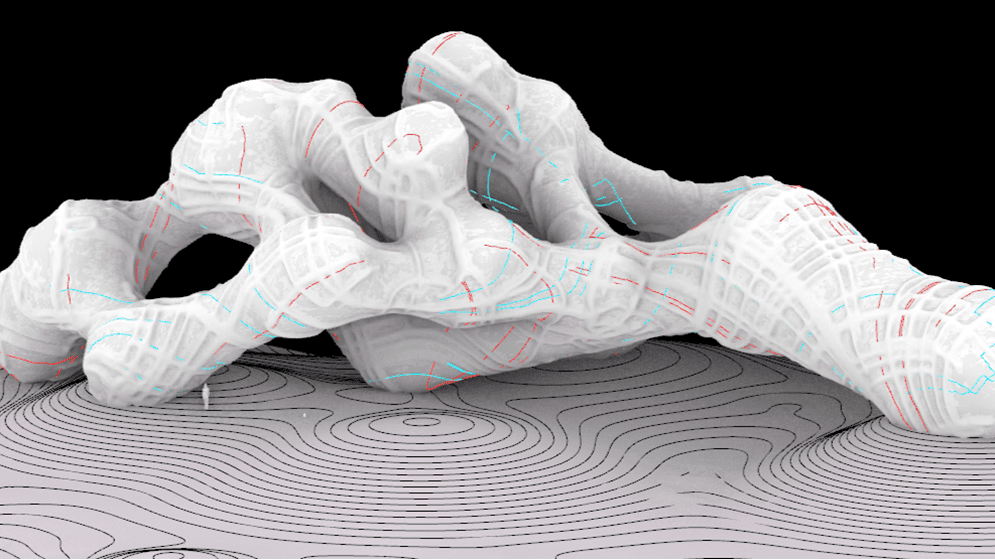
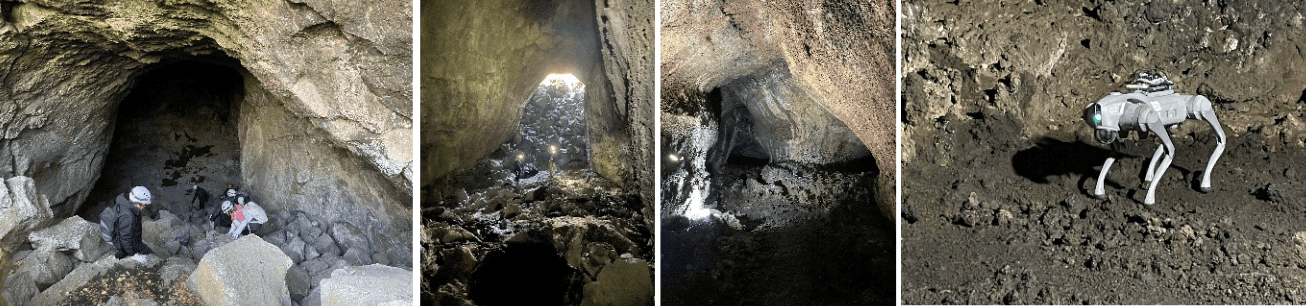
One of the most exciting areas of current research focuses on lunar and Martian lava tubes.
Formed billions of years ago by volcanic activity, these enormous underground tunnels could offer natural protection against radiation, micrometeorites and the extreme temperature fluctuations experienced on planetary surfaces. Instead of constructing entirely new protective structures, future settlements may adapt these existing geological formations.
This idea represents an important shift in architectural thinking. Rather than imposing architecture onto a landscape, we begin by understanding and working with the environment itself.
As architects, we have always transformed natural conditions into places for human life. Space simply challenges us to do so under entirely new circumstances.
The Rise of Robotic Construction
Perhaps the greatest transformation will not be where we build, but how we build.
Future construction sites on the Moon are expected to operate largely without human workers. Autonomous robotic systems equipped with computer vision, sensors and artificial intelligence will survey terrain, process local materials, print structural components and monitor construction quality.
For architects, this opens exciting possibilities.
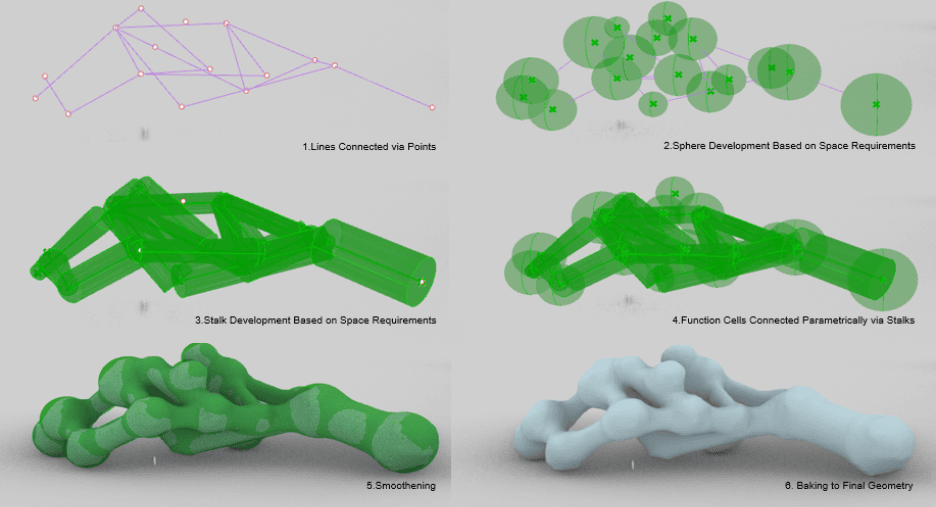
Instead of producing static drawings, we may increasingly design adaptive construction workflows, robotic fabrication strategies and intelligent systems capable of responding to changing environmental conditions.
Far from replacing architects, these technologies expand our role. Throughout history, architects have embraced evolving tools, from the copper chisel to the compass, the drawing board, computer-aided design, and now artificial intelligence. Each technological shift has transformed how we conceive and create space, allowing us to focus less on repetitive tasks and more on creativity, critical thinking, and human-centred design. As automation takes over routine processes, our ability to imagine, question, and shape meaningful environments becomes even more important.
Why This Matters on Earth
It is tempting to think that space architecture belongs exclusively to astronauts and scientists. In reality, many of the innovations being developed for the Moon have direct applications here on Earth.
Climate change, resource scarcity and rapid urbanization are forcing architects to rethink how we design and build. The need to reduce construction waste, minimize embodied carbon and use locally available materials mirrors many of the challenges encountered in space.
Robotic construction can improve safety and precision. AI can support design optimization and environmental analysis. Digital fabrication enables customized, material-efficient construction. Earth-based materials such as clay and earthen composites are once again gaining attention as sustainable alternatives to conventional construction.
The Moon has become an unexpected laboratory for solving some of Earth's most pressing architectural challenges.
A New Role for Architects
The architect of the future will need to combine creativity with computational thinking, environmental understanding and technological innovation.
Tomorrow's projects will involve collaborating not only with engineers and planners, but also with roboticists, planetary geologists, computer scientists, artificial intelligence specialists, psychologists, digital media etc.
Architecture is becoming increasingly interdisciplinary, and this presents an extraordinary opportunity for the next generation of designers.
The profession has always evolved alongside humanity's ambitions. From cathedrals and skyscrapers to sustainable cities, each era has demanded new ways of thinking. Designing beyond Earth represents the next chapter in that story.
Looking Ahead
When people hear the phrase space architecture, they often imagine futuristic cities beneath glass domes on distant planets. Yet the real story is far more meaningful.
Designing for space is teaching us how to build with fewer resources, adapt to harsher environments and work more intelligently with technology. It reminds us that architecture has always been about resilience, innovation and improving the human experience.
The next architectural revolution will not be defined simply by building on the Moon. It will be defined by how the knowledge gained from designing for extreme environments beyond Earth transforms the way we design, construct, and inhabit our own planet.
As Earth itself becomes an increasingly challenging environment due to climate change, resource pressures, and environmental uncertainty, the lessons learned from off-Earth habitats have direct implications for life on Earth. Strategies developed for resilience, resource efficiency, closed-loop systems, and adaptation in extreme conditions can inform new architectural solutions for our changing planet.
The future of architecture lies in recognising that the challenges we face are interconnected. By exploring how we build beyond Earth, we discover new ways to create more resilient, sustainable, and adaptable environments here on Earth. At the same time, designing for off-Earth habitats challenges us to reconsider what is truly essential for human life, the conditions, connections, and experiences that define what it means to be human when removed from the familiar environments of our planet.