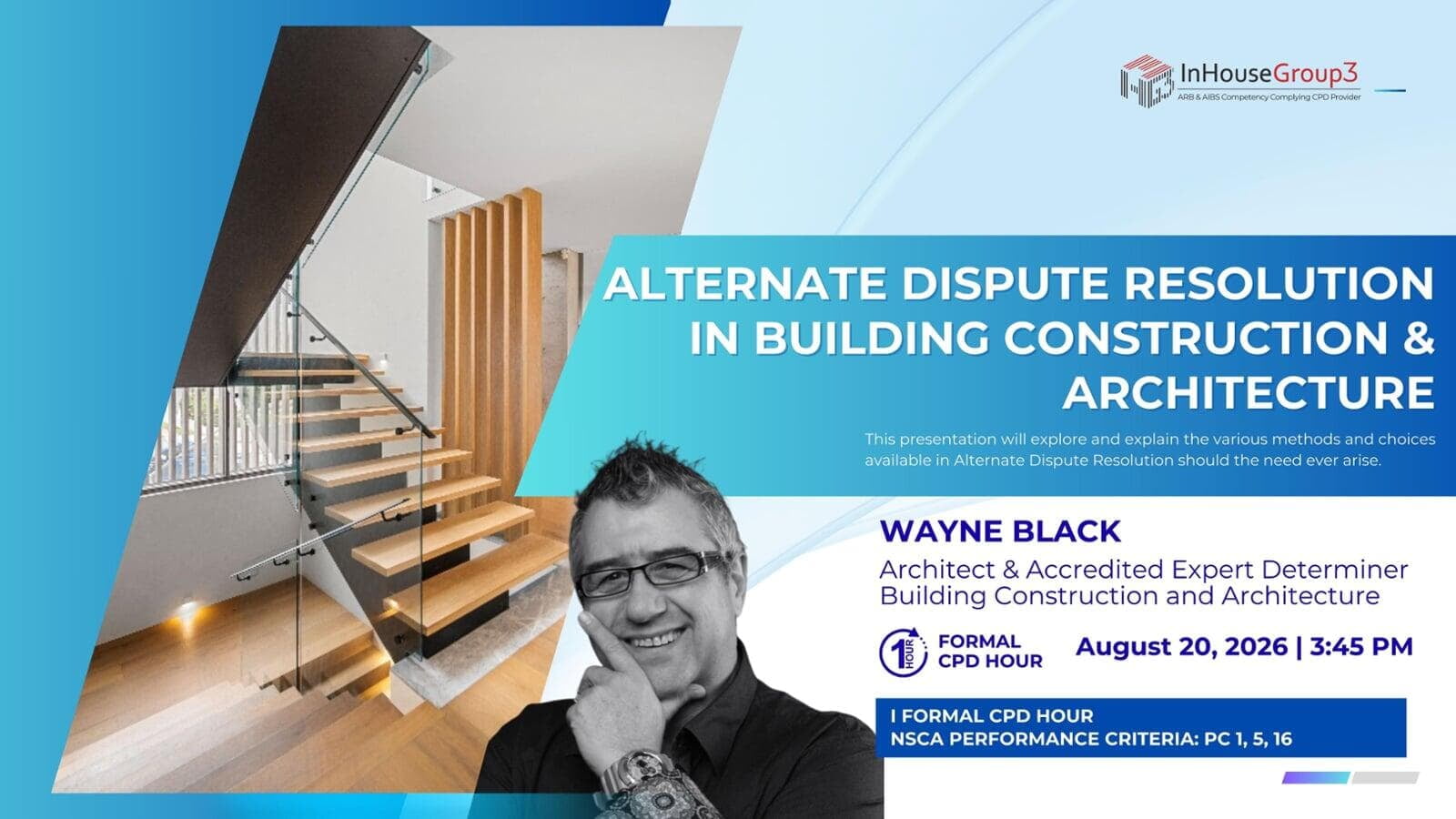
Alternate Dispute Resolution in Building Construction and Architecture
Introduction
This presentation will explore and explain the various methods and choices available in Alternate Dispute Resolution should the need ever arise
My clients are in dispute with the builder. I have been implicated!! They know that Litigation can be devastating.. So, What are the alternatives?
Most construction contracts today contain clauses that require either 'reasonable attempts' being made by the parties to resolve their differences or suggest the engagement of a Dispute Resolution Practitioner who can facilitate Negotiation and Mediation or place the dispute into the hands of an Accredited Expert Determiner. In all circumstances any process must be consensual between the parties. Alternate dispute resolution can keep the dispute out of court. It is fast becoming the preferred way to resolve disputes in Building Construction and Architecture.
The chances are that one day when you least expect it, you might find yourself joined into a dispute. I will bring some these alternate ways to light discuss the key aspects and effectiveness of each.
Biology
Wayne Black is registered Practicing Architect with a driving passion for good design.
He is member of the following Architecture bodies:
- Australia Institute of Architects #4707
- New South Wales Architects Registration Board #5657
- Architects Registration Board of Victoria #19028
- New South Wales Practicing Certificate #97455
- Association of Consulting Architects #2268
- ArchiTEAM #3288
Since obtaining his accreditation, Wayne has been accepted into the following organizations:
- Australian Dispute Resolution Association
- Dispute Resolution Board Foundation
- Victorian Association for Dispute Resolution Inc.
At the end of this presentation, attendees will:
- Understand that most Building Contracts contain ADR clauses.
- Be able to establish the obligations of the contract administrator.
- Be able to identify some the available methods (3-4) of ADR.
- Understand the suitability and effectiveness of those methods.
- Be able to identify the most important issues to the parties
- e.g Cost, Time, Stress, Preservation of Relationship.
- Be able to identify the worst the best possible outcomes.
- Know how to move forward if a dispute arises.
- Know alternate ways of "keeping costly disputes OUT of COURT"